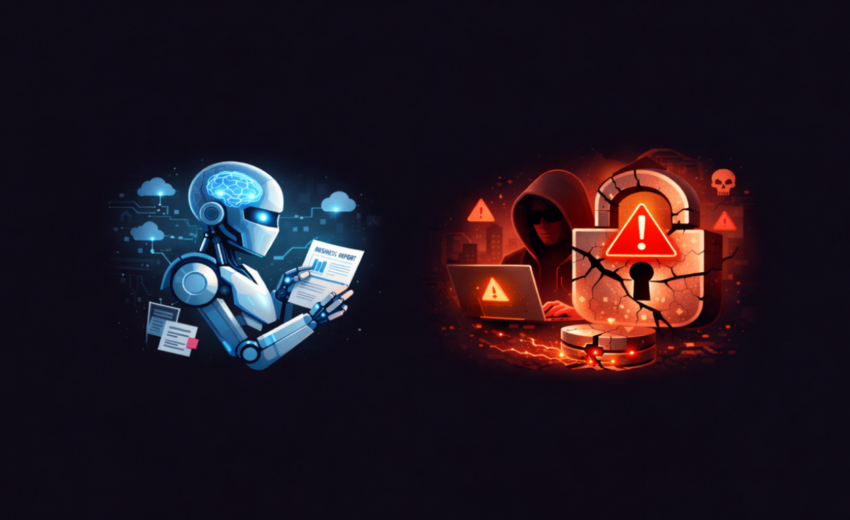

AI
Business process automation in Australia has come a long way from the days of clunky rule-based bots that broke every time someone changed a spreadsheet column. If you’ve been around long enough to remember the RPA hype cycle of 2017 to 2020, you know exactly what we mean. Today’s AI automation is something different entirely, and understanding that difference is what separates businesses saving 15 hours a week from those still waiting for their automation “project” to pay off.
According to Zip’s 2025 business process automation report, roughly 34% of all business-related tasks currently use some form of automation to improve workflows, and AI adoption from businesses increased by 22% between 2023 and 2024. That gap between 34% and 100% is where most Australian businesses still live. And honestly, that’s an opportunity more than a problem.
This post walks you through what’s changed, what’s worth your attention now, and how to think about picking the right approach for your business.
What old-school RPA got right (and badly wrong)
Robotic process automation was sold as the future of business efficiency. The pitch was simple: record what a human does on a screen, replay it automatically, forever. For certain tasks, it worked. Invoice processing, data entry between two stable systems, copying rows from one database to another. If nothing ever changed, RPA held up fine.
The problem was that things always change. A vendor updates their portal. Your team changes a form field. The bot breaks. Then someone has to fix it, which usually meant calling the vendor who built it, waiting two weeks, and paying again. Maintenance costs ate the savings. For many businesses, RPA projects quietly stalled after the first year.
That’s not a knock on the teams who chose RPA. It was the best option available at the time. But if you’re still running on legacy RPA infrastructure and wondering why it feels fragile, this is why.
How modern business AI automation actually works
Modern AI automation for business doesn’t just replay steps. It understands context, handles variation, and makes decisions. Think of the difference between a script and a capable team member. RPA follows the script exactly. An AI automation system reads the situation and adapts.
A practical example: imagine a professional services firm receives client onboarding emails in a dozen different formats from different senders. An RPA bot would need a separate rule for each format. An AI automation agent reads any format, extracts what it needs, checks it against your CRM, flags gaps, and routes the file to the right person, without you writing a rule for every scenario. That’s not hypothetical, that’s what a well-built ai automation platform does right now.
According to the Reserve Bank of Australia’s November 2025 Bulletin, Australian firms are actively investing in AI and technology to address productivity challenges, with skills capability gaps and operational complexity cited as the main drivers pushing businesses toward intelligent automation.
The other big shift is in how these systems are built. An ai automation builder today can be a no-code platform like Make or n8n, or a custom-built system using large language models wired into your existing tools. The right choice depends on your complexity, your data sensitivity, and how much ongoing flexibility you need. There’s no single correct answer, but there is a correct answer for your specific situation.
Where business process automation in Australia is heading in 2026
The next phase of business process automation in Australia isn’t just about doing more tasks automatically. It’s about AI automation agents that can handle entire workflows end to end, not just individual steps. An agent can receive a lead, qualify it, check your calendar, draft a proposal, send it for approval, and follow up if there’s no response. A human sets the goal. The agent figures out the steps.
This is already happening across sectors. Consider a scenario where a small property management firm replaces four hours of daily admin with a single AI workflow covering maintenance requests, tenant comms, and invoice reconciliation. At that scale, even a 10-person business can run with significantly less manual overhead. For more on what that looks like in a specific industry, the post on AI automation for real estate agents covers the practical application well.
The businesses pulling ahead aren’t necessarily the biggest ones. They’re the ones who’ve been deliberate about where they apply automation first. Lead qualification, client follow-up, document generation, reporting, and internal approvals are the high-return starting points for most SMBs. Starting with the highest-volume, lowest-judgment tasks is almost always the right call.
For Australian businesses thinking about what to automate, there are a few patterns worth knowing:
- Tasks done more than 10 times a week with consistent inputs are strong automation candidates
- Processes that touch multiple tools (CRM, email, accounting, project management) benefit most from AI connectors
- Customer-facing workflows with tight response-time expectations are where AI agents generate the clearest ROI
- Anything involving document reading, extraction, or formatting is now reliably automatable with AI
How to choose between platforms, agencies, and doing it yourself
There’s no shortage of options when it comes to business ai automation tools in 2026. No-code platforms like Zapier, Make, and n8n let you connect apps and run basic workflows without writing code. They’re genuinely useful for straightforward tasks. If your automation needs are simple, start there and see how far you get.
But many businesses hit a ceiling quickly. You want logic that adapts. You want AI to draft content, read documents, or make decisions based on incomplete information. That’s where a generic no-code tool stops and a proper ai automation agency comes in. Working with an ai automation agency in Australia, especially one that understands local compliance requirements and the specific tools Australian businesses run, saves you the trial-and-error cost of figuring it out yourself.
There’s also the question of strategy before tools. Most of the common AI implementation mistakes Australian businesses make come from jumping to a tool before clarifying what problem it’s supposed to solve. A platform won’t fix a process that’s fundamentally broken. An ai automation agency in Sydney or elsewhere should be helping you think through that before any build starts.
The honest answer is that most businesses need a combination: some no-code automation for simple connective tissue, custom AI builds for the high-value workflows, and a clear plan for how they connect. That plan is what separates businesses that see real returns from those who end up with a drawer full of half-finished automations.
If you’re ready to stop guessing and get a clear picture of where AI actually fits in your operations, get your personalised AI Roadmap and we’ll map out exactly where AI fits in your business so you can move with confidence.